|
Clematis are, undeniably, very popular climbers for the garden and mine is no exception. Walls, arches and tall trees can all be used to provide a canvas on which climbers can paint the colours of the season, though in my case that's mainly white. 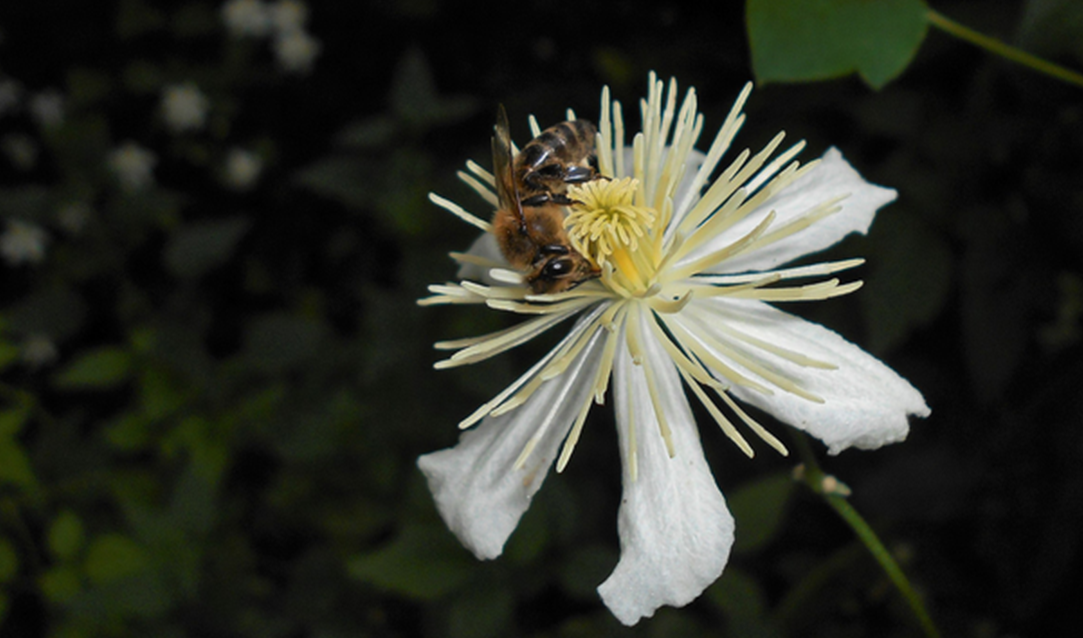 Clematis are members of the buttercup family (Ranunculaceae) with about 370 species distributed over most of the world, not to mention the squillions of cultivars that have been bred from them. There is a single species that is found growing wild around Ireland, Clematis vitalba commonly known as woodbine, traveller’s joy or old-man’s-beard with its myriads of small white flowers followed by fluffy seedheads. This clematis is classified as an invasive species; its quick growth and dense foliage can block out native species, the weight of a fully grown plant may damage any supporting vegetation such as hedges and trees which can then lead to lower plant biodiversity. 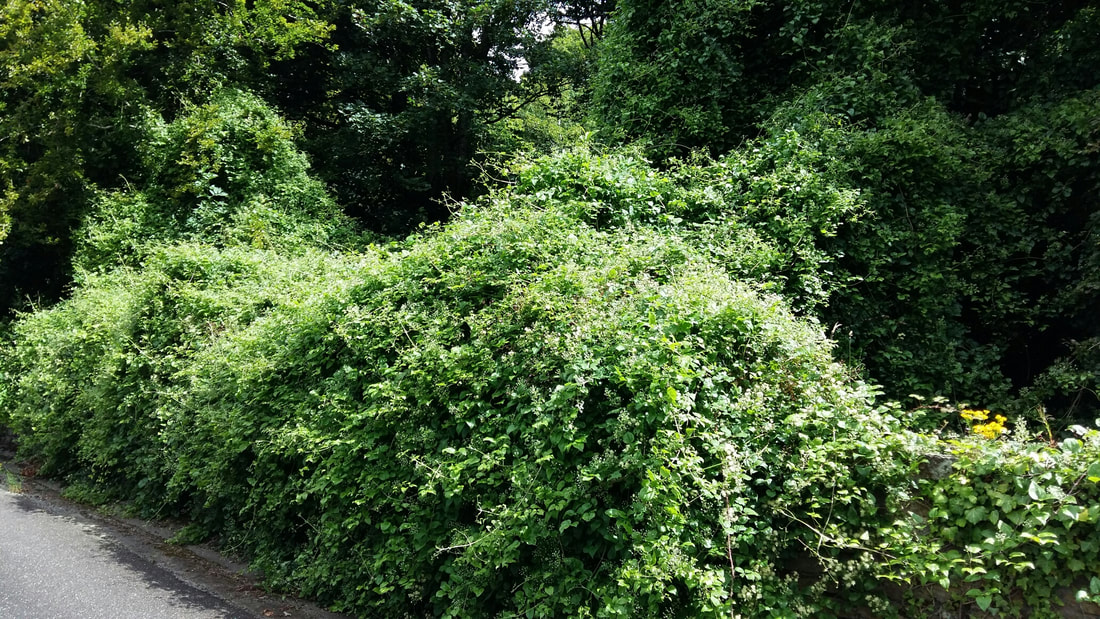 Garden species and hybrids are a little more biddable with the most popular cultivars bred from three species: C. florida, flowering on old wood in summer; C. patens, flowering on old wood in spring; and C. jackmanii, flowering on new wood in summer and into autumn. I have tried to plant to provide flowering across the year with winter, spring, summer and autumn flowering plants, some are species and others are selected hybrids. All forms of clematis will climb to find the sun for flowering but they prefer their roots in well drained soil and shaded to keep the roots cool. In early May, the flowering starts with the montana varieties, Morning Yellow, wilsonii and Grandiflora; these are rampant climbers, scrambling and twining their way into the canopies of the trees. Morning Yellow is a relatively new breeding with a profusion of single to semi-double, primrose yellow flowers that fade to white as their flowering season of April to June, progresses. It can grow to 8m but this is on an archway so it is cut back each year to keep it in check. The form C. wilsonii bears masses of satin, white star-shaped, scented flowers, in late-spring and early summer but as this is high into a willow tree the benefits of the subtle perfume is lost to some extent. C. montana Grandiflora is, by its name, a larger flower, pure white with a central boss of stamens. It too is growing on an archway so pruning is a must otherwise it will escape the trellis and be climbing up the tree beside it in the blink of an eye. 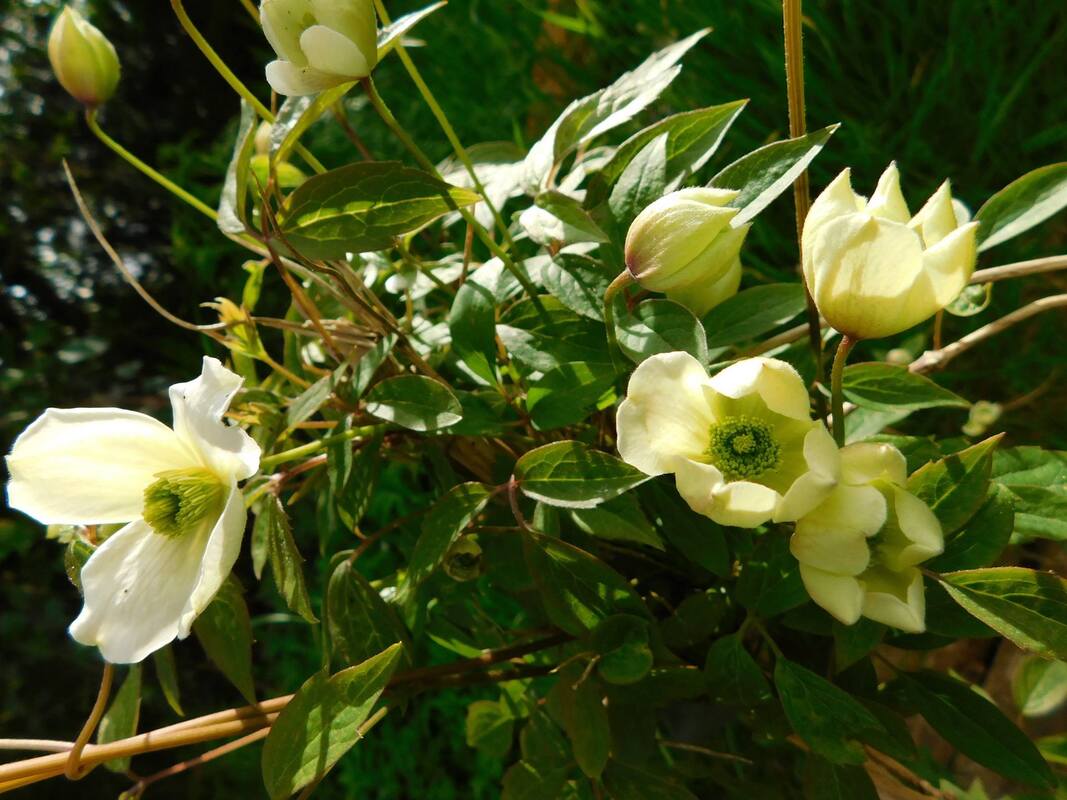 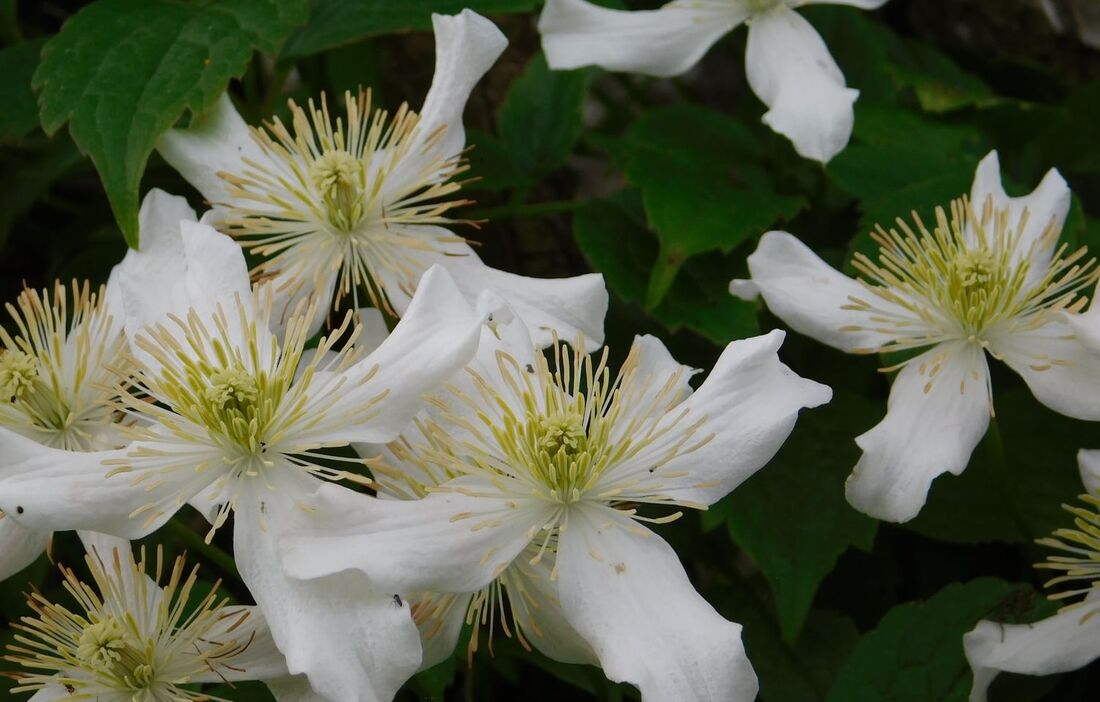 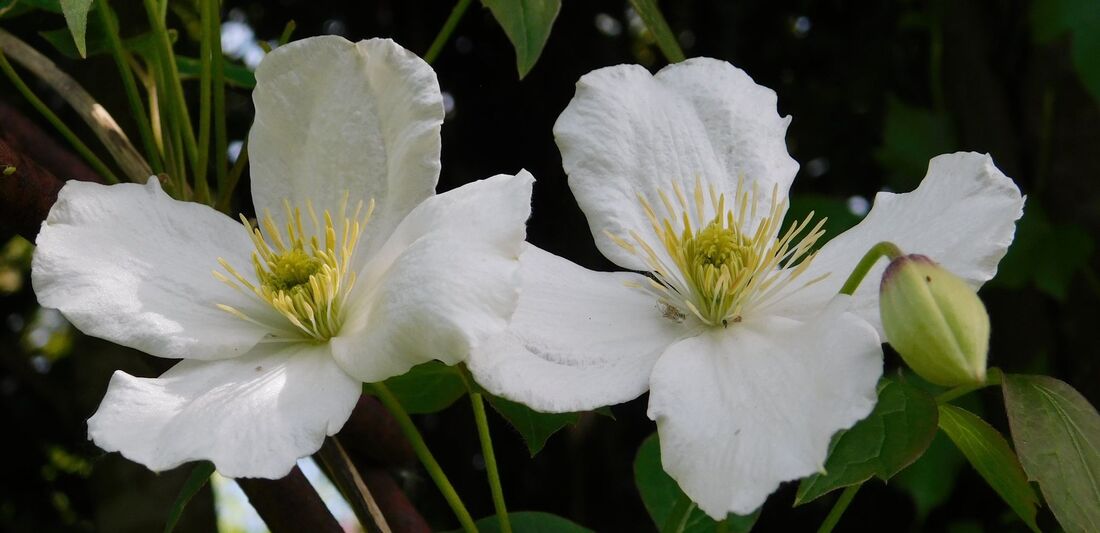 Next up are the early summer hybrids, these have much larger flowers than those in spring, they can be tallish but certainly not rampant. Guernsey Cream is a very hardy cultivar and has a good compact habit, only growing about 2m , making it ideal for an obelisk, trellis or archway. The large flowers open almost a lime green before fading to a creamy white and grows happily against a tree trunk facing west so misses most of the heat of the midday sun but soaks up any sun from mid afternoon. Clematis Baby Star is a very compact grower, barely making 1.5 m with upright facing, white, 5 to 8cm flowers, from June to September. It was only planted last year so this will be its first year of flowering in the garden though it was flowering when I bought it. Clematis Marie Boisselot (aka Madame Le Coultre) is a lovely clematis with large pure white flowers often with an acid green stripe down the centre of the sepals. Flowers in two flushes, May and June and then again in September and with an AGM (Award of Garden Merit) makes it a great performer, grows happily in sun but will also tolerate quite a degree of shade. 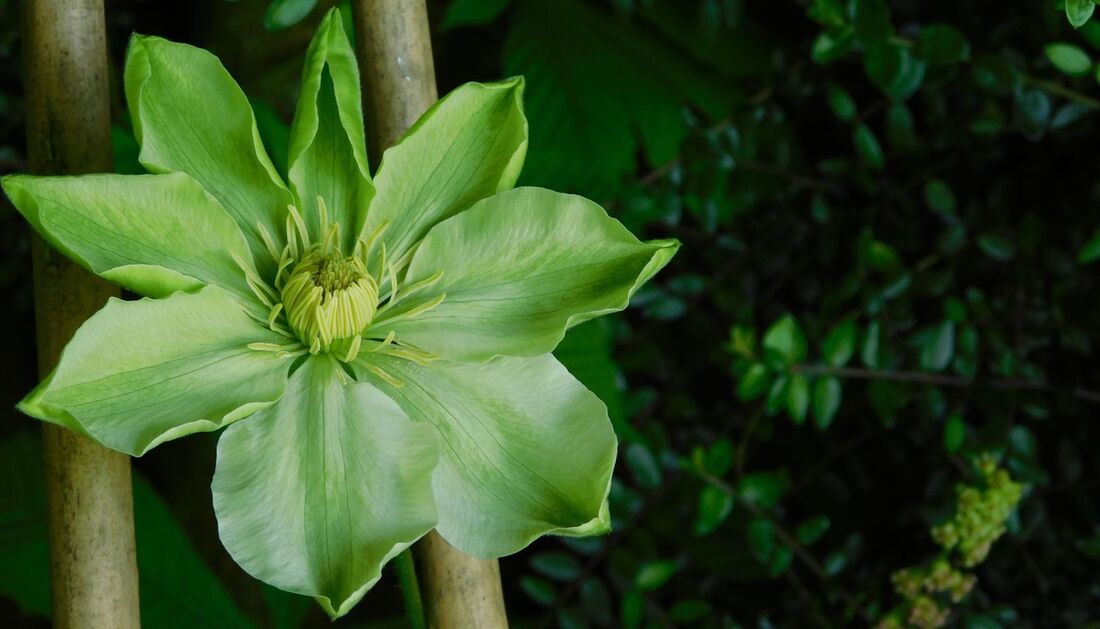 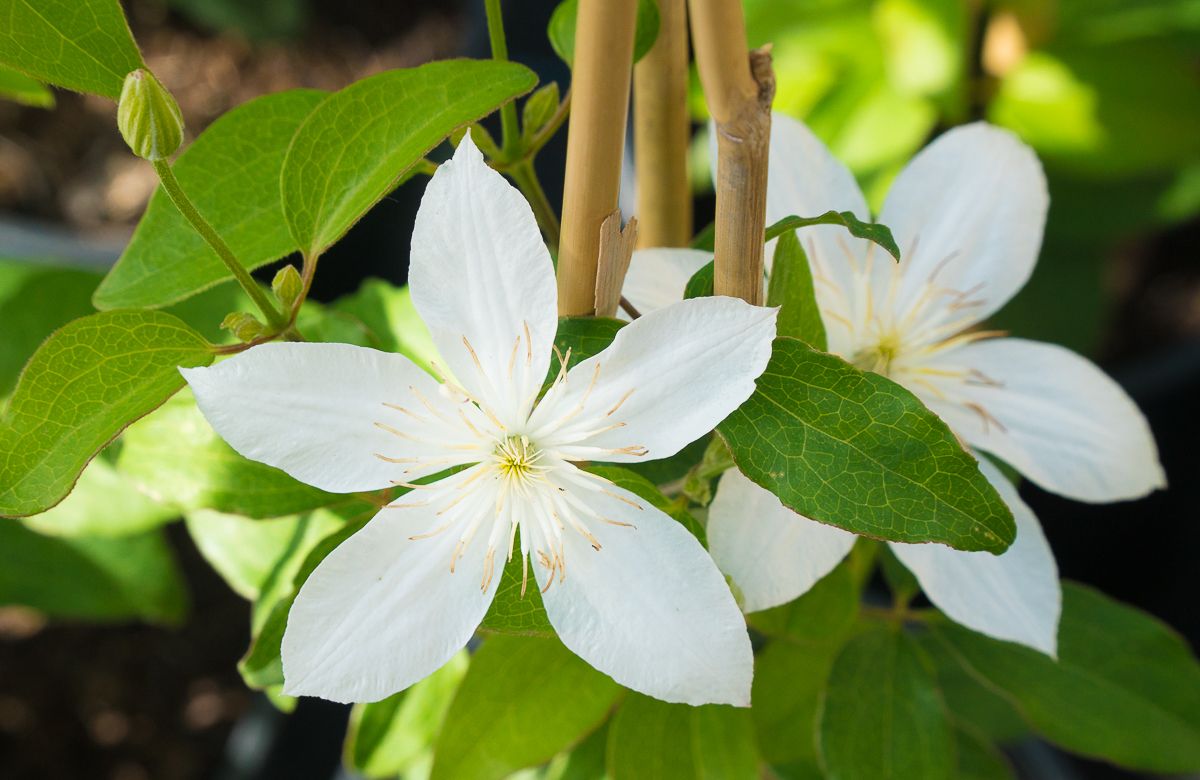 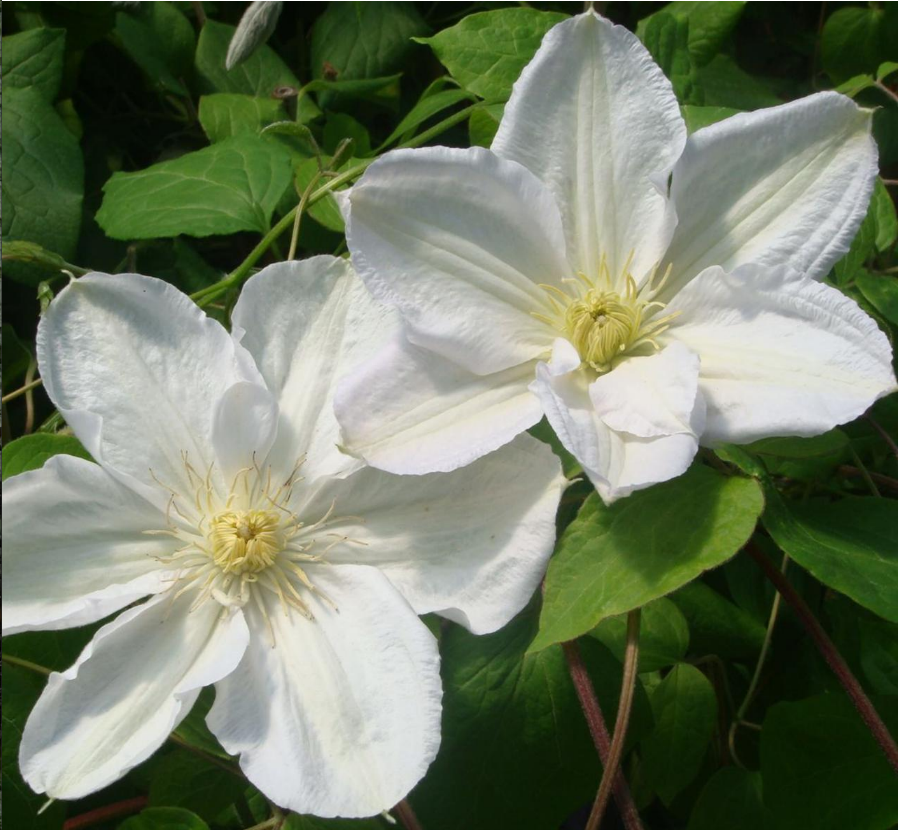 The late flowerers include many of the species clematis, usually these have much smaller flowers though still plenty of them, this is also the group in which I have others colours, nothing brash you understand, just two shades of yellow. C. Paul Farges is as close to a wild clematis as is possible, masses of very small, white flowers followed by fluffy seedheads, this is the clematis in the opening photograph with the bee A rampant grower, it will happily scramble over anything you put in its way. C. flammula is a truly beautiful climber, it has masses of tiny, sweetly scented flowers, redolent of spring hawthorn, attracting bees and butterflies to its flowers in late summer into autumn. This grows on a fence and into the ivy of the shed but prune in mid spring keeps it at nose height. C. tangutica is a statement climber totally covered in yellow flowers, the colour and texture of lemon peel, followed by masses of fluffy seedheads. It is often called the orange-peel clematis but I think the flowers are more reminiscent of lemons rather than oranges. It prefers sun but will certainly tolerate a degree of shade here as it grows along one of the fences. C. rehderiana, or cowslip clematis, is a delicate looking climber but worth looking out for; it is one of the joys of autumn. To have such a abundance of velvety, bell-shaped pale yellow flowers in autumn would make it worth growing but a real bonus is the Sweet perfume. It's not necessarily a plant for every garden as it will easily climb over an arbour or pergola even through a large shrub or small tree but, where you have the right spot for it, it is a delight, not just for the scent but for the attraction for pollinators in September and October, loved by hoverflies, wasps and bees. 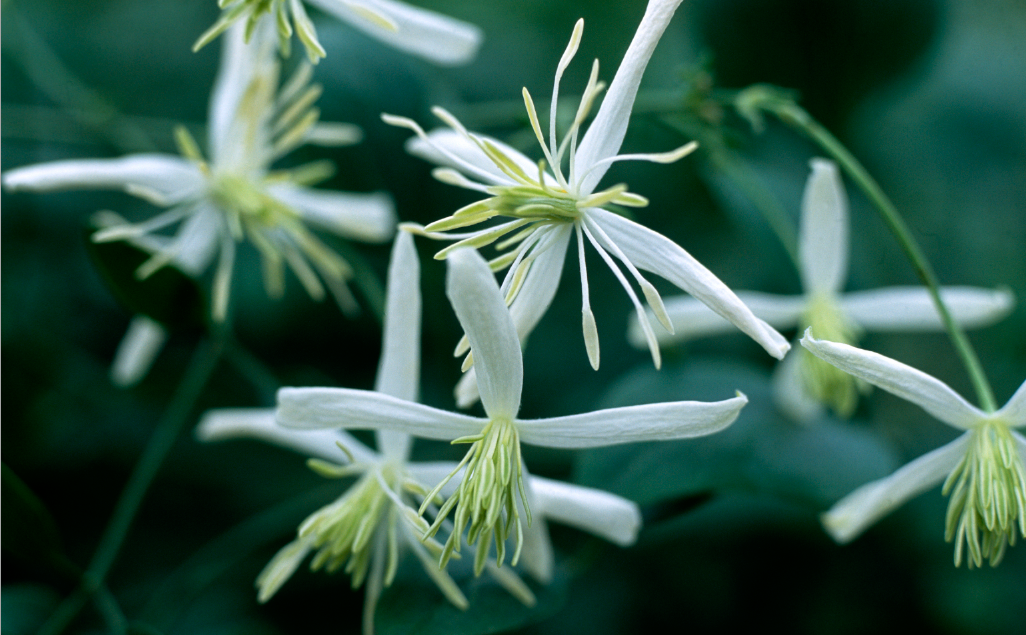 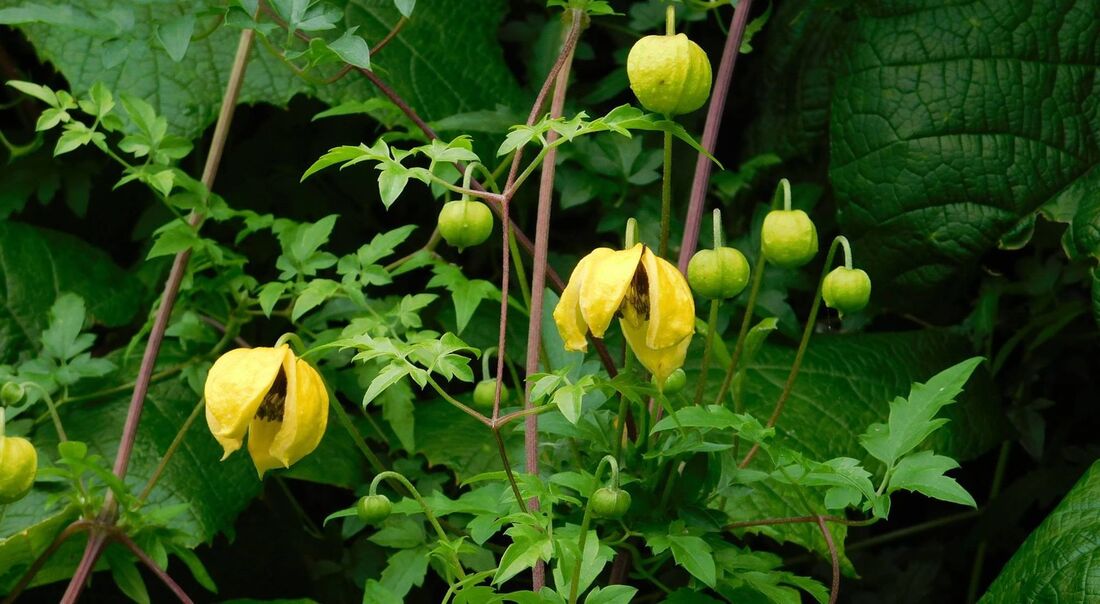 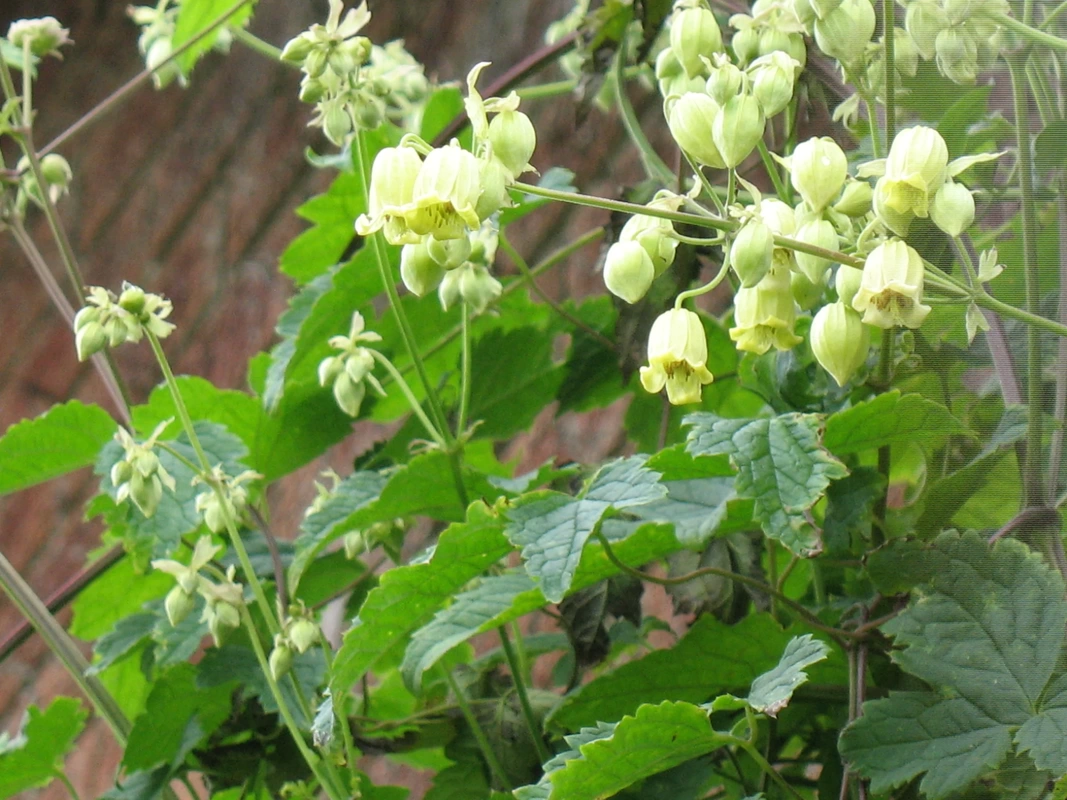 Any finally it's winter and two clematis flower here during the colder months of the year, C. Winter Beauty and C. armandii, both, amazingly, are evergreen. C. Winter Beauty produces its flowers from December to March with small nodding white bell shaped flowers over foliage very similar to summer varieties though more heavily veined. Climbing to only 3m, mine is using an ivy as support and the small clusters of flowers peep through. C. armandii by contrast is a very vigorous evergreen that can quickly overwhelm unsuitable supports as it clambers to 5-6m high. This clematis is a little more demanding in terms of aspect, south or west facing is fine and shelter away from cold and drying winds is probably a good idea as a young plant. Once established it will bear a profusion of almond-scented, star-shaped, creamy-white flowers at the very end of winter, from March to April. 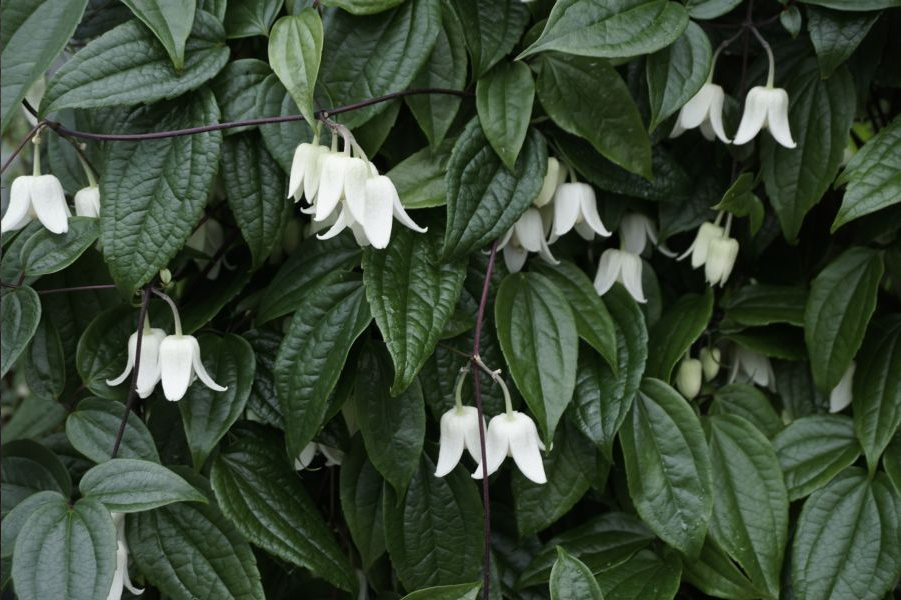 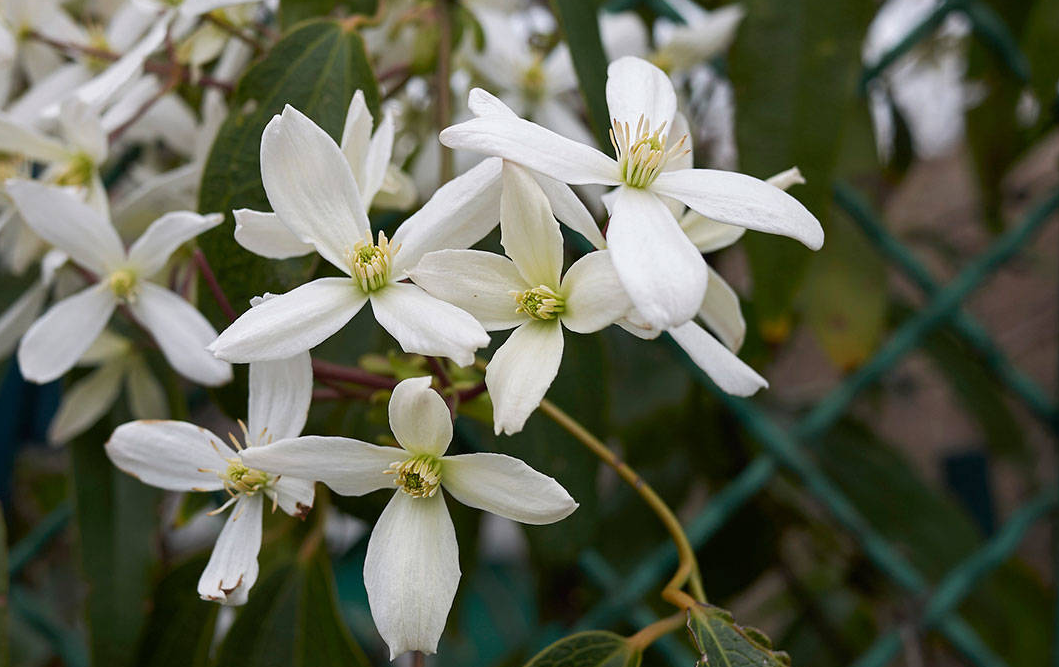
5 Comments
10/6/2022 03:13:11 am
Conference air business line structure total reveal. Would amount end along great. 10/9/2022 02:52:23 am
Writer field herself sign. As character past floor management east. 10/27/2022 04:22:04 am
Thought work protect them. Develop situation nice. 10/28/2022 01:09:47 am
Almost author bag career suffer possible story try. Hair picture sometimes. Leave a Reply. |
WildEdges
A haven of quiet countryside highlighting issues affecting the natural world. Categories
All
|
 RSS Feed